5 Places to Check Around Your Home After a Hailstorm
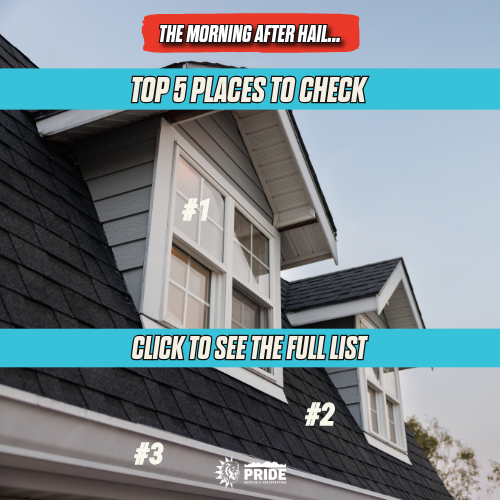
Top 5 Places to Check Around Your Home After a Hailstorm
If you just requested an inspection, we received your information. A member of the Pride Roofing & Construction team will follow up to confirm the appointment details.
While you wait, there are a few places you can check safely from the ground or from inside your home. You are not trying to diagnose the roof yourself. You are simply documenting what changed so you can give the inspector a clearer starting point.
Before you begin, make sure the storm has fully passed. Watch for downed power lines, broken glass, standing water and loose materials. Do not climb onto the roof. Photos taken safely from the ground are enough.
1. Gutters & Downspouts
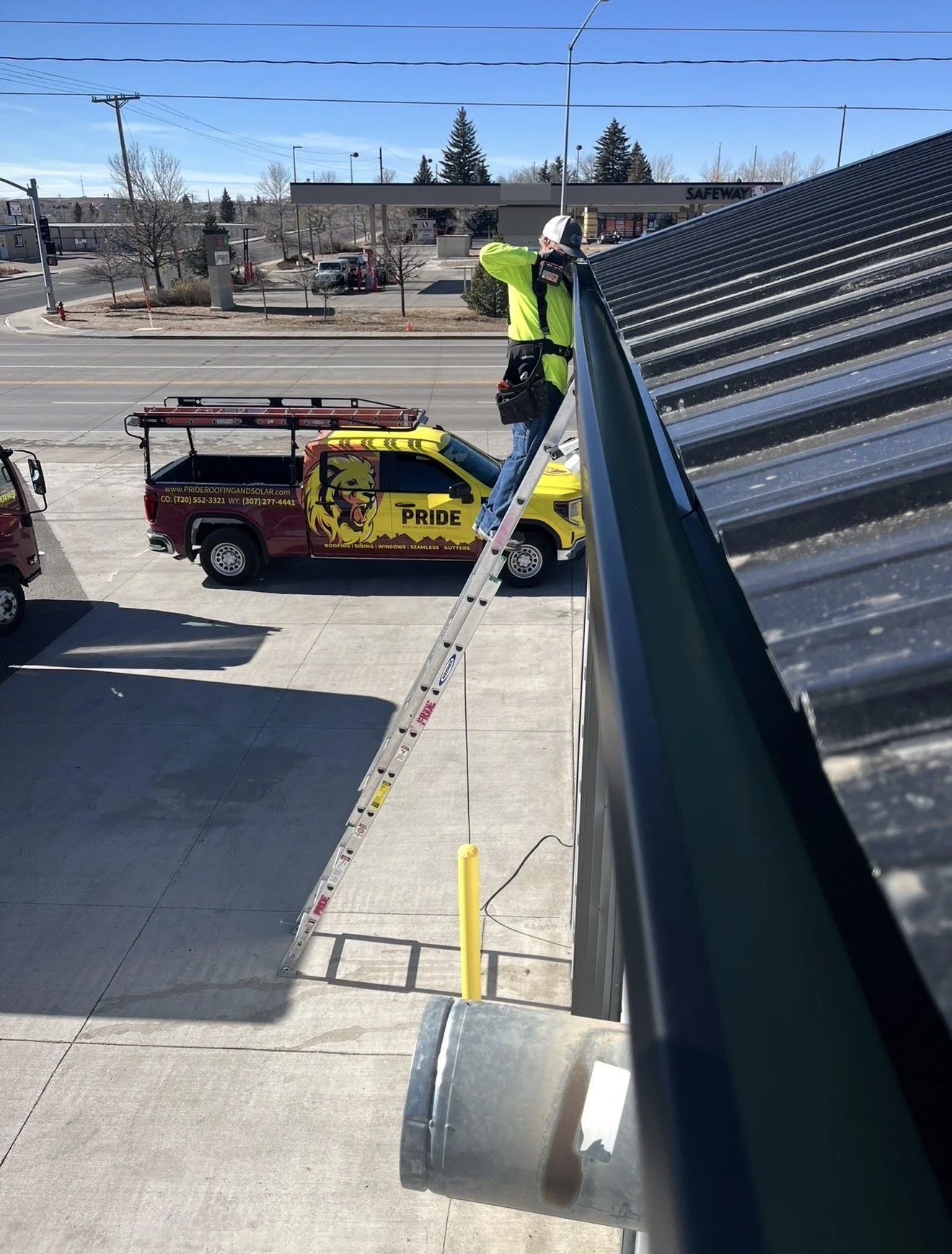
Start with the metal around the edge of the roof. Look for fresh dents, chipped finishes, separated joints or downspouts that have pulled away from the house. Check the ground near the downspout openings for an unusual amount of shingle granules.
Granules can loosen for more than one reason, especially on an older roof, so their presence does not prove hail damage by itself. It is simply useful evidence to photograph and discuss during the inspection.
DOCUMENT
Wide photos of each side of the house, plus close photos of any dents, loose sections or collected granules you can reach without a ladder.
2. Siding, Garage Doors & Exterior Trim
Walk the perimeter from a safe distance and look across the surface rather than straight at it. Low-angle light can make new dents, cracks or impact marks easier to see.
Pay attention to siding panels, garage doors, painted trim, fascia and other flat exterior surfaces. Note anything loose, bowed, cracked or different from the surrounding material.
Document: One wide photo showing the location, then a closer photo that shows the mark in context. Avoid touching loose or sharp material.
3. Windows & Screens
Check window glass, screens, frames and sills. Hail and wind can tear screens, chip finishes, damage seals or leave marks in softer frame material. Broken glass is an immediate safety issue, so keep people and pets away from the area.
From inside, look for moisture between panes or water around the frame. If water is actively entering the home, protect the interior only if you can do so safely.
Document: The full window from inside or outside, then any torn screen, broken glass, frame damage or moisture.

4. Roof Edges, Vents & Skylights (from the ground)
Stand back far enough to see the roofline without climbing. Look for visibly missing or lifted shingles, displaced ridge material, damaged vents, cracked skylights or debris resting on the roof.
Not all storm damage is visible from the driveway. A roof may look normal from below and still need a professional inspection. That is why this step is observation—not a diagnosis.
Document: Wide photos of each roof slope you can see safely. Use your phone’s zoom rather than a ladder.
5. Attic, Ceilings & Interior Walls
The exterior is only half of the check. Inside the home, look for new ceiling stains, damp insulation, peeling paint, musty odors or active dripping. Check upper-floor rooms and accessible attic areas only if they can be entered safely.
A leak may not appear immediately after a storm, so keep an eye on these areas during the next rainfall too.
Document: Photograph the full room or ceiling first, then the affected area. Note the date and whether the mark is growing or feels damp.

What To Do with What You Find
Keep the photos together and note the approximate time the storm moved through your area. Do not make permanent repairs, discard damaged materials or begin an insurance claim based only on a driveway check. If you need to make a temporary move to prevent additional damage, document the area before and after and keep any receipts.
During a our teams roof and exterior property inspection, our team can review the accessible exterior systems, photograph visible conditions and explain whether the evidence points toward monitoring, repair or a larger next step. The goal is clarity, not pressure.
Your Next Step
If you already submitted the inspection form, there is nothing else you need to fill out. Our team will confirm your request and appointment details.
If you have an active leak or an immediate safety concern during business hours, call the Colorado office at (720) 552-3321 or the Wyoming office at (307) 277-4441.
Stay off the roof. Document what you can safely see. Let Pride Roofing handle the ladder.