New shingles get the attention. The work underneath them deserves just as much.
A shingle roof replacement should begin with an assessment and a written scope. Ask what is being removed, what will be inspected once the old material is off, and how concealed damage will be documented before additional work is authorized.
Look Beyond the Shingle Color
Discuss the roof deck, underlayment, flashing, roof edges, penetrations, and ventilation where relevant. The proposal should explain the materials and installation details for your roof, including applicable requirements.
Know What Happens Around the House
Ask about material delivery, parking, plants, pets, noise, cleanup, and the final walkthrough. A little planning makes installation day much easier to live through.
Understand the Payment Plan
If insurance is involved, coverage depends on the policy and the insurer’s decision. Do not assume a new roof is covered or that the deductible is your only possible expense. Review the construction agreement and ask how changes will be priced.
Start with the Condition of Your Roof
Bring your questions about symptoms, materials, timing, and budget. We can begin with what you know and explain what needs a closer look.
Have a roof question in Colorado or Wyoming? Request an inspection with Pride Roofing & Construction. We’ll explain what we see, what it means, and the options worth considering.

Remove Existing Roof & Repair
Before installing your new roof, we will have to remove the old one. The first step is to protect your property from any debris, so our crew will make sure to lay a tarp down around the edges of the home to catch any material being removed. Next, we will rip off the existing roof, always making sure not to cause any damage and minimize overall noise. Once the shingles are off and all that is left is the roof deck, we will closely examine the deck and repair or replace any loose, missing, or damaged sections. This is very important as we need to have a strong foundation layer to install your new shingles properly.

Installing Substrate and Flashing
A substrate is the first layer to your new roof and is vital to the roof’s overall performance, as it works to support the other systems that will be installed later. Since we work within a state with cold winters, we will install an ice and water shield, another layer that protects from damages caused by ice and water. Next comes the flashing, the metal transition material used to direct water away from critical areas around the home’s chimney or vents. Flashing once again helps water damage from occurring, specifically within the joints and edges of the roof.

Installing Shingles
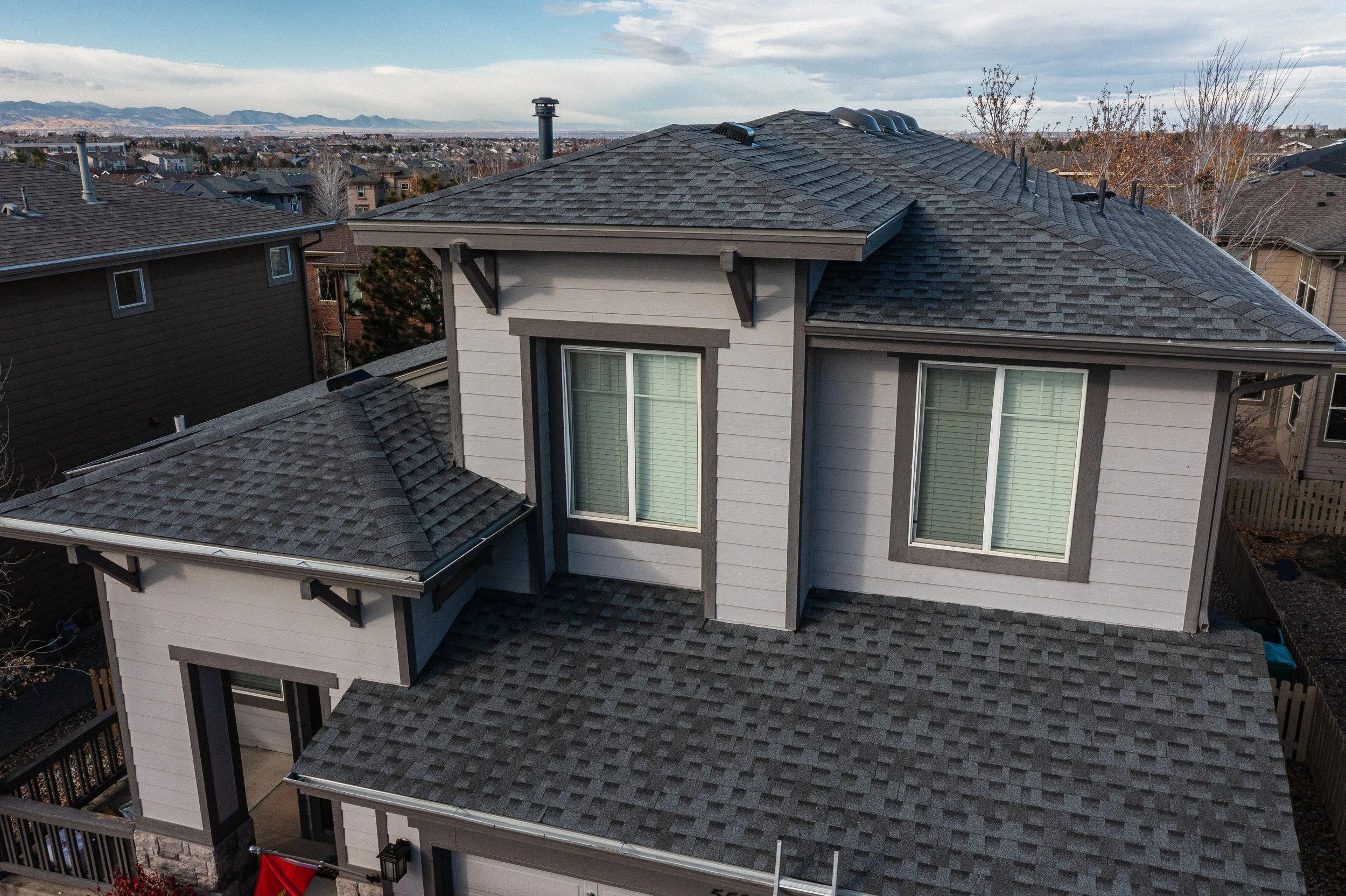
Installing shingles is the step that you as a homeowner will finally be able to see, as your chosen material will now be visible, and your roof will soon look great again! During this step, our crew will nail down the new shingles in a way that best suits your roof’s deck, giving you numerous years of protection once done. This process can be pretty loud, so our crew will make sure to minimize noise and work efficiently, as we usually take no longer than a day to finish!
Clean Up & Final Inspection
Once the work is complete, just as we did during the removal step, we will make sure to clean up your property again. We will carefully assess that no shingles or nails can be found in your yard, as the last thing we want is someone getting hurt by stepping on a nail we may have left behind. Once the cleaning is complete, you can look at our work and see if you are unhappy with anything because our ultimate goal is your satisfaction. Remember that even if you don’t notice anything now, we offer a five-year workmanship warranty on the installation, so you can rest assured that we will fix any issues that may come up!