An energy-efficient home starts with knowing where energy is being wasted. Buying four new products before checking the house can become a very expensive guessing game.
Use these four steps to put the conversation in a useful order.

1. Find the Gaps Before Buying the Upgrade
Consider a home energy assessment. Air leaks, insulation gaps, and equipment issues can affect comfort together. The Department of Energy recommends considering insulation and air sealing alongside equipment efficiency.
2. Match Equipment to the Actual Need
When appliances or heating and cooling equipment need replacement, compare energy use, sizing, installation, and total ownership cost. A label helps; a properly selected and installed system matters too.
3. Pay Attention to Hot Water
Repair leaks and review hot-water use and equipment condition. Ask a qualified professional about safe settings, sizing, and suitable upgrades rather than changing settings blindly.
4. Evaluate Solar After the Roof
Solar deserves a property-specific assessment of sunlight, roof condition, installation cost, utility terms, and financing. It does not produce the same savings for every home. Address roof work before putting a long-term system above it.
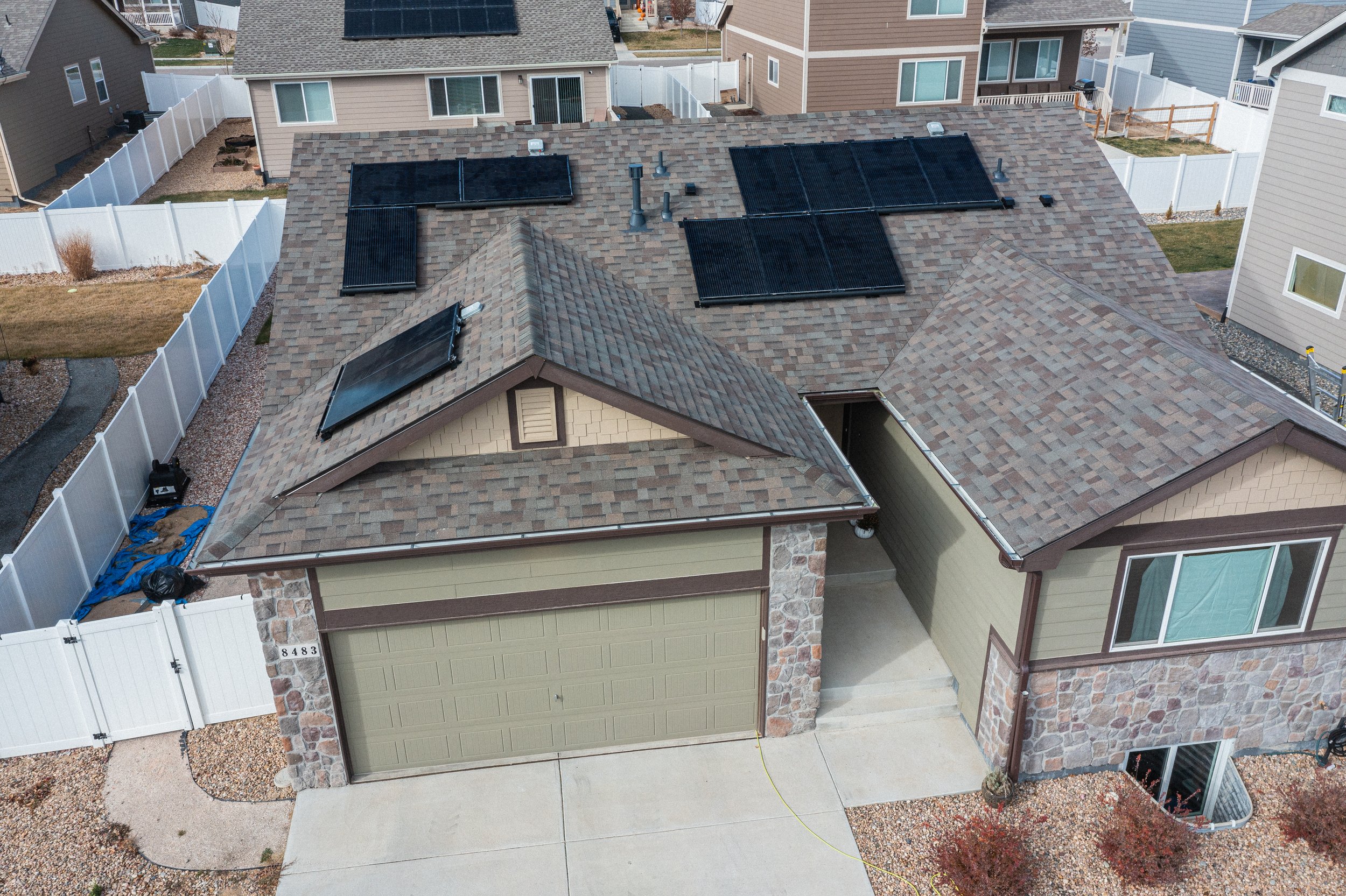
Make the Roof Part of the Plan
Roof condition, insulation, and attic design should be considered together when relevant. Start with an assessment, prioritize the findings, and spend where the evidence points.
Have a roof question in Colorado or Wyoming? Request an inspection with Pride Roofing & Construction. We’ll explain what we see, what it means, and the options worth considering.